
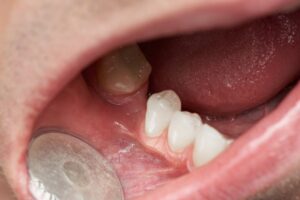
If you’ve lost a tooth toward the back of your mouth, you might not feel very motivated to replace it. If nobody can see the gap when you smile, does it really matter? While replacing a missing front tooth may seem like an obvious cosmetic priority, losing a back tooth can create several problems that affect your oral health, bite, and ability to chew. Dental implants offer a long-lasting way to replace missing teeth, even those that aren’t visible when you smile. Here are several reasons why you shouldn’t ignore a missing tooth just because it’s out of sight.
Prevent Teeth from Shifting
Your teeth work together to maintain proper spacing and alignment. When you lose a tooth, the surrounding teeth may gradually begin shifting into the empty space. Teeth in the opposite arch may also move downward or upward because they no longer have an opposing tooth to make contact with.
These changes can affect your bite, create alignment problems, and make certain areas of your mouth more difficult to clean. Replacing a missing tooth with a dental implant helps fill the gap and maintain proper spacing.
Protect Your Jawbone from Deterioration
A major downside to losing a tooth is the bone loss that can occur underneath the empty space.
Your natural tooth roots stimulate the jawbone whenever you chew or bite. Once a tooth is removed, that stimulation disappears, and the surrounding bone may gradually deteriorate.
Dental implants are unique because they replace both the visible portion of a tooth and its root. The implant post is placed into the jawbone, where it provides stimulation through everyday chewing forces. This helps preserve bone structure and reduce the bone deterioration associated with tooth loss.
Keep Chewing Comfortably
Even if a missing tooth isn’t visible, it can affect how you eat. Losing a molar or premolar may make it harder to break down certain foods, particularly tougher meats, crunchy vegetables, and other foods that require substantial chewing.
You might unknowingly begin favoring one side of your mouth, placing additional stress on the remaining teeth and jaw muscles.
A dental implant restores a stable chewing surface, allowing you to distribute biting forces more evenly and enjoy a wider variety of foods.
Avoid Putting Extra Stress on Your Remaining Teeth
When one tooth is missing, the surrounding teeth may have to compensate for its absence. This can create uneven pressure when biting and chewing.
Over time, excessive forces may contribute to wear, discomfort, and damage to other teeth. Replacing the missing tooth with an implant helps restore a more balanced bite and allows your remaining teeth to function as intended.
Enjoy a Long-Lasting Tooth Replacement
Implants are strategically created to provide a durable, natural-looking replacement for missing teeth. With proper placement, good oral hygiene, and regular dental checkups, implants can last for decades, perhaps even the rest of your life. Although the implant-supported crown may eventually need replacement, the implant itself can provide a long-term foundation.
Out of sight, out of mind – it’s tempting to think that way if you’ve lost a low-visibility tooth. But, just because a missing tooth isn’t high-profile doesn’t mean it isn’t affecting your oral health. Talk to your dentist about whether dental implants are the right solution for restoring your smile from front to back.
About the Author
Dr. Steven Kendrick is your Midwest City implant specialist. He earned his Doctor of Dental Surgery degree at the Oklahoma University College of Dentistry prior to training at the Misch International Implant Institute, where he learned how to place and restore dental implants. With the help of his Midwest Dental Center team, Dr. Kendrick can perform implant treatment in-office, using our advanced technology for comfortable treatment and precise results. Contact us online or call (405) 679-2029.